

Rats and mice are far more capable of getting inside homes than most people realize. They don’t need large openings, broken doors, or obvious damage to find their way in. In fact, many infestations start through gaps that homeowners don’t even notice. Once inside, rodents can cause structural damage, contaminate living spaces, and multiply quickly. Understanding how rats and mice get into homes - and why it matters - is key to preventing a small issue from turning into a costly problem.

Rodents Can Fit Through Shockingly Small Openings
One of the biggest misconceptions about rodents is how much space they need to enter a home.
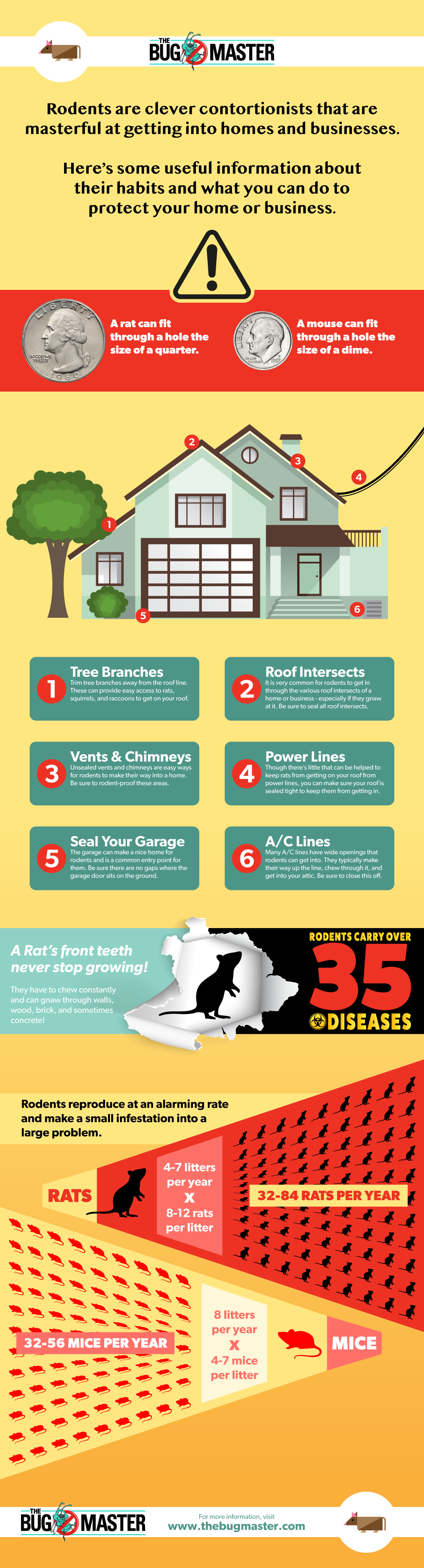
- A mouse can squeeze through an opening about the size of a dime.
- A rat can fit through a hole roughly the size of a quarter.
If their head fits, their body usually follows.
This means tiny gaps, cracks, and seams around a home can be all it takes.
1. Tree Branches Near the Roofline
Tree branches that touch or hang over a roof provide easy access for rodents.
Rats are strong climbers and can travel along branches to reach rooflines.
Once there, they can access vents, roof intersections, and weak points along the structure.
Keeping branches trimmed away from the home helps reduce this risk.
2. Roof Intersections and Rooflines
Roof intersections are one of the most common rodent entry points.
These areas often contain small gaps, aging materials, or overlapping seams that rodents can exploit.
Rats and mice may squeeze through existing openings or gnaw materials to widen them.
Because these areas are out of sight, infestations often go unnoticed until damage is already done.
3. Vents and Chimneys
Unprotected vents and chimneys are highly attractive to rodents.
Warm air, food odors, and quiet interior spaces make these openings ideal entry points.
Without proper screens or covers, rodents can move directly into attics and wall voids.
Once inside, they can nest, chew wiring, and spread contamination throughout the home.
4. Power Lines and Utility Lines
Rodents frequently use power lines, cable lines, and other utilities as pathways to homes.
These lines often lead directly to rooflines or exterior walls.
If the area around the line isn’t sealed tightly, rodents can slip inside with ease.
Even small gaps around these penetrations can be enough for mice or rats to enter.
5. Garage Doors and Gaps Near the Ground
Garages are one of the most common access points for rodents.
Small gaps under garage doors, worn weather stripping, or cracks along the foundation can allow rodents inside.
Once in the garage, it’s often easy for them to move into the rest of the home.
Because garages are less frequently sealed or inspected, infestations can grow unnoticed.
6. A/C Lines and Exterior Pipe Openings
Air conditioning lines, plumbing pipes, and utility penetrations often leave small gaps in exterior walls.
These openings may seem insignificant but are often large enough for rodents to exploit.
If not properly sealed, they provide direct access into walls, crawl spaces, and attics.

Why Rodent Damage Escalates Quickly
Rodent infestations rarely remain minor.
Rats and mice have front teeth that never stop growing, forcing them to chew constantly.
This chewing can damage insulation, wood, drywall, wiring, plastic piping, and even concrete.
In addition to structural damage, rodents contaminate surfaces with droppings and urine as they move through a home.
Health Risks Associated With Rodents
Rodents are known carriers of over 35 diseases that can impact humans and pets.
These diseases can spread through droppings, urine, nesting materials, and contaminated surfaces.
Even brief rodent activity can create health risks inside a home.
Because many infestations start in hidden areas, exposure often occurs before rodents are seen.
Why Early Prevention Matters
Rodents reproduce at an alarming rate.
- Rats can produce 4 to 7 litters per year, with 8 to 12 offspring per litter.
- Mice reproduce even faster, producing up to 8 litters per year, with 4 to 7 offspring per litter.
What begins as a single entry point can quickly turn into a widespread infestation if left unaddressed.
Identifying and sealing small openings early helps reduce long-term damage, health risks, and repair costs.
Download the full rodent infographic
Get A Free Pest Control Quote
How are you preventing Formosan Termites from reaching your home?
Our Termite Pros will keep Formosan termites away from your most important investment: your home.